
Deks
- Web3
- Fintech
- iOS
- Proposal
- Figma
- Prototyping
Unsolicited UX redesign for Deks, a Solana gift-card app: clearer hierarchy, simpler navigation, and conversion-focused Home, Send Gift, and Rewards flows.

Unsolicited redesign proposal
Deks
UX Redesign
Web3 / Fintech
2025
Mobile app, iOS
Proposal, not implemented
Overview
Deks had a strong product concept: sending crypto gift cards without requiring the recipient to have a wallet.
The issue was not the idea. The issue was the experience.
The interface was not communicating the value clearly, the navigation created unnecessary noise, and the main actions competed for attention instead of guiding users toward conversion.
The Problem
Deks had a genuinely strong concept: send crypto gift cards with no wallet required.
But the interface was working against it.
The value was not clear from the first moment. Navigation was cluttered. Actions competed for attention. There were no clear prompts to drive conversion or build repeat-use habits.
The current experience and UI were not aiding conversion or retention.
The proposal focused on three areas where friction was highest:
- Home
- Send Gift
- Rewards
Home
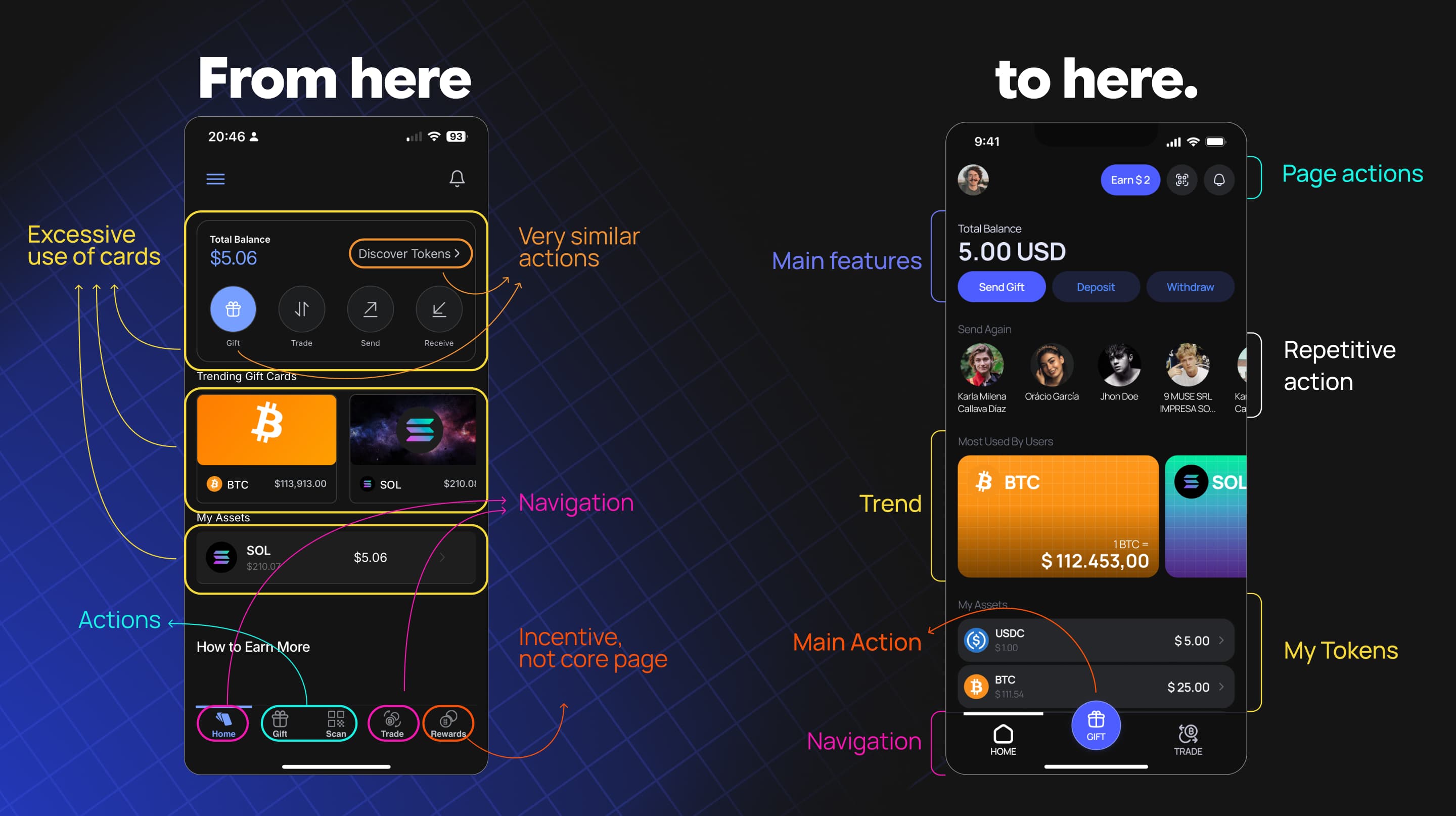
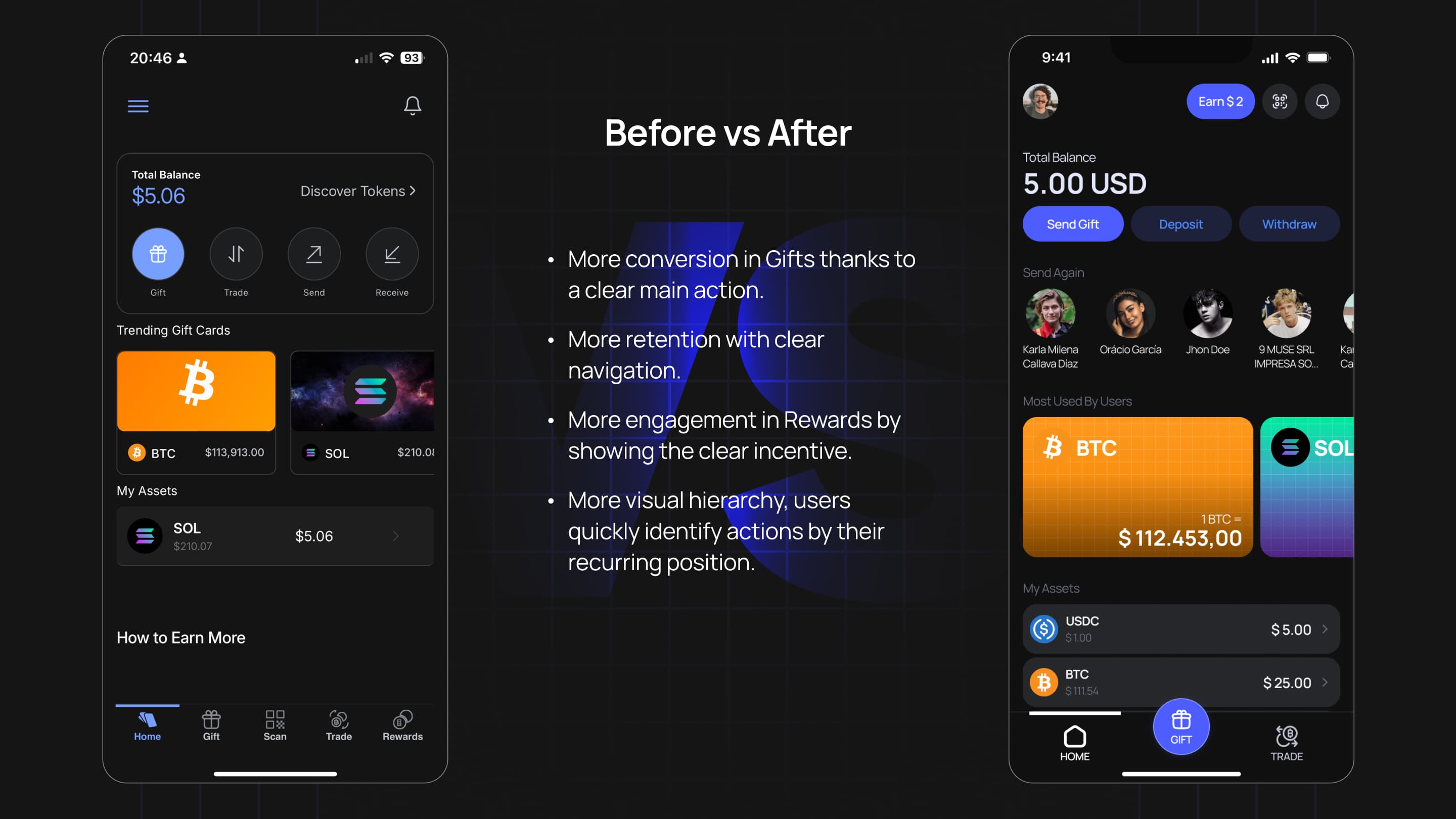
The original Home screen stacked too many competing sections with no clear hierarchy.
Five navigation tabs diluted the focus, and the primary action, Send Gift, had the same visual weight as Trade, Send, and Receive.
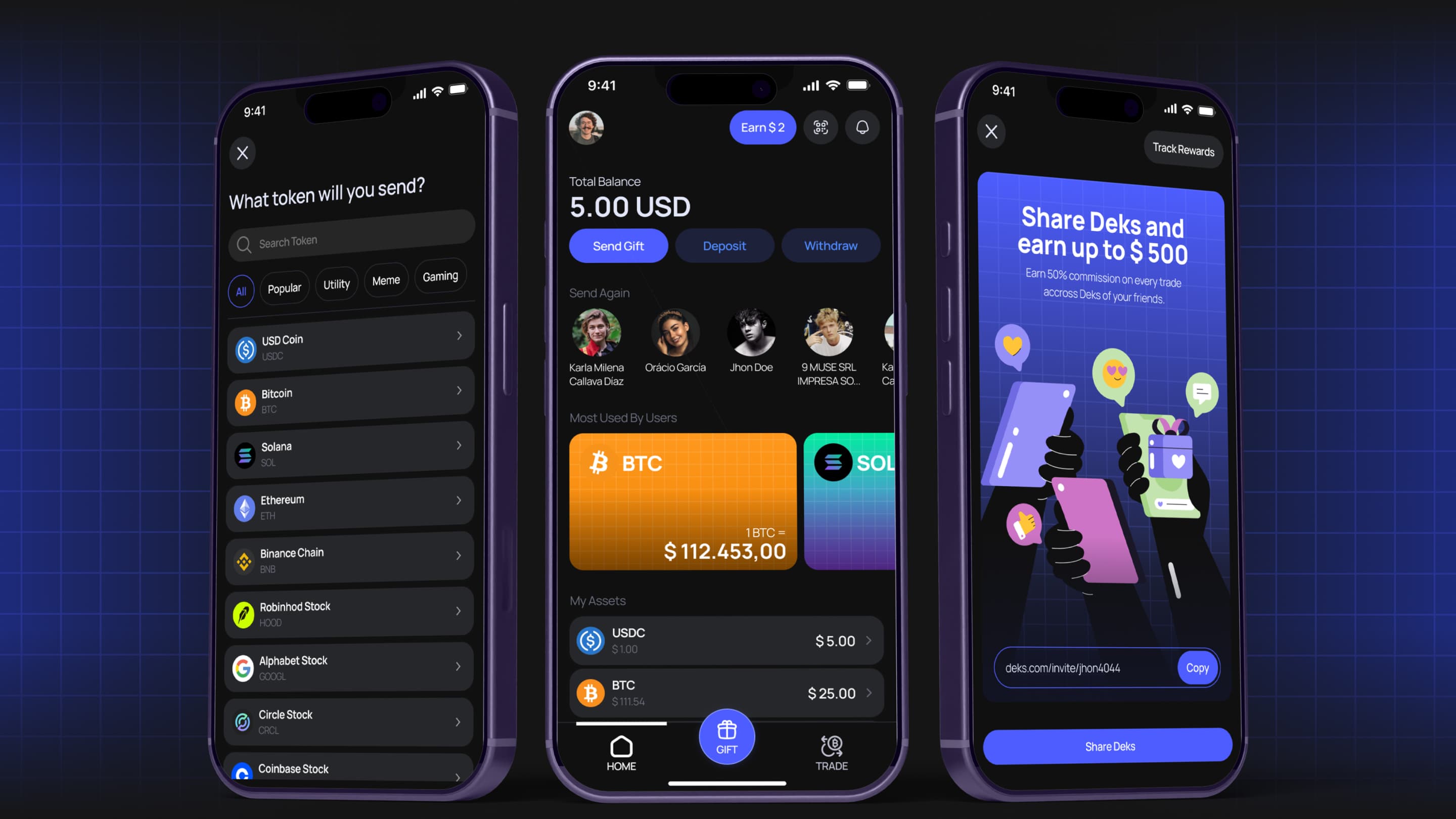
The redesign established a single dominant CTA directly below the balance, reduced navigation to three tabs, and added a Send Again contact row to encourage repeat use.
Send Gift
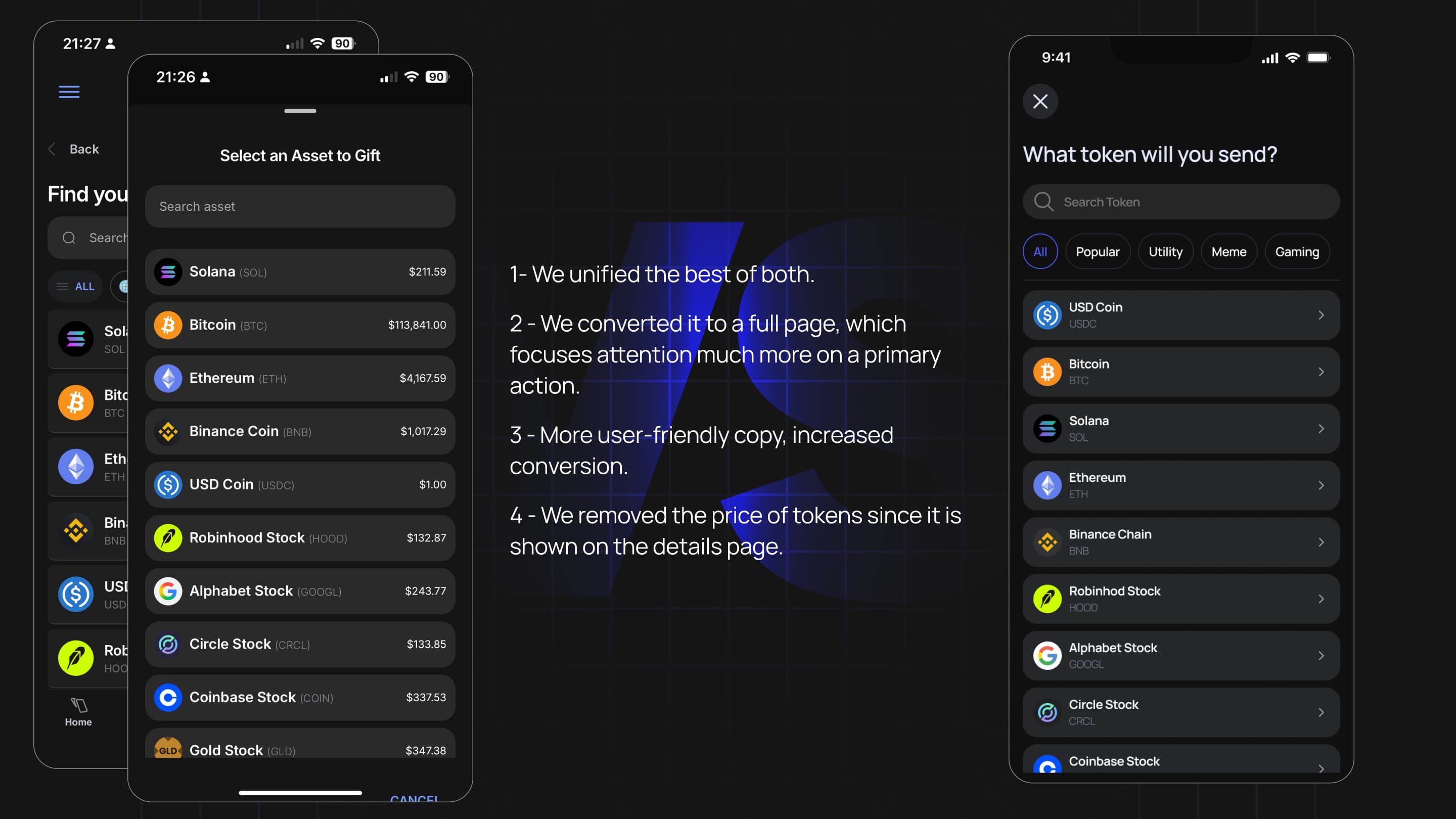
The original token selection experience was a bottom sheet modal with a raw list of tokens and no effective way to filter.
Prices were shown too early in the flow, adding unnecessary cognitive load before the user had even decided what to send.
The redesign converted token selection into a full-screen flow with search, category filters, and a cleaner list structure. Prices were moved to the detail step, where they are more useful.
Rewards
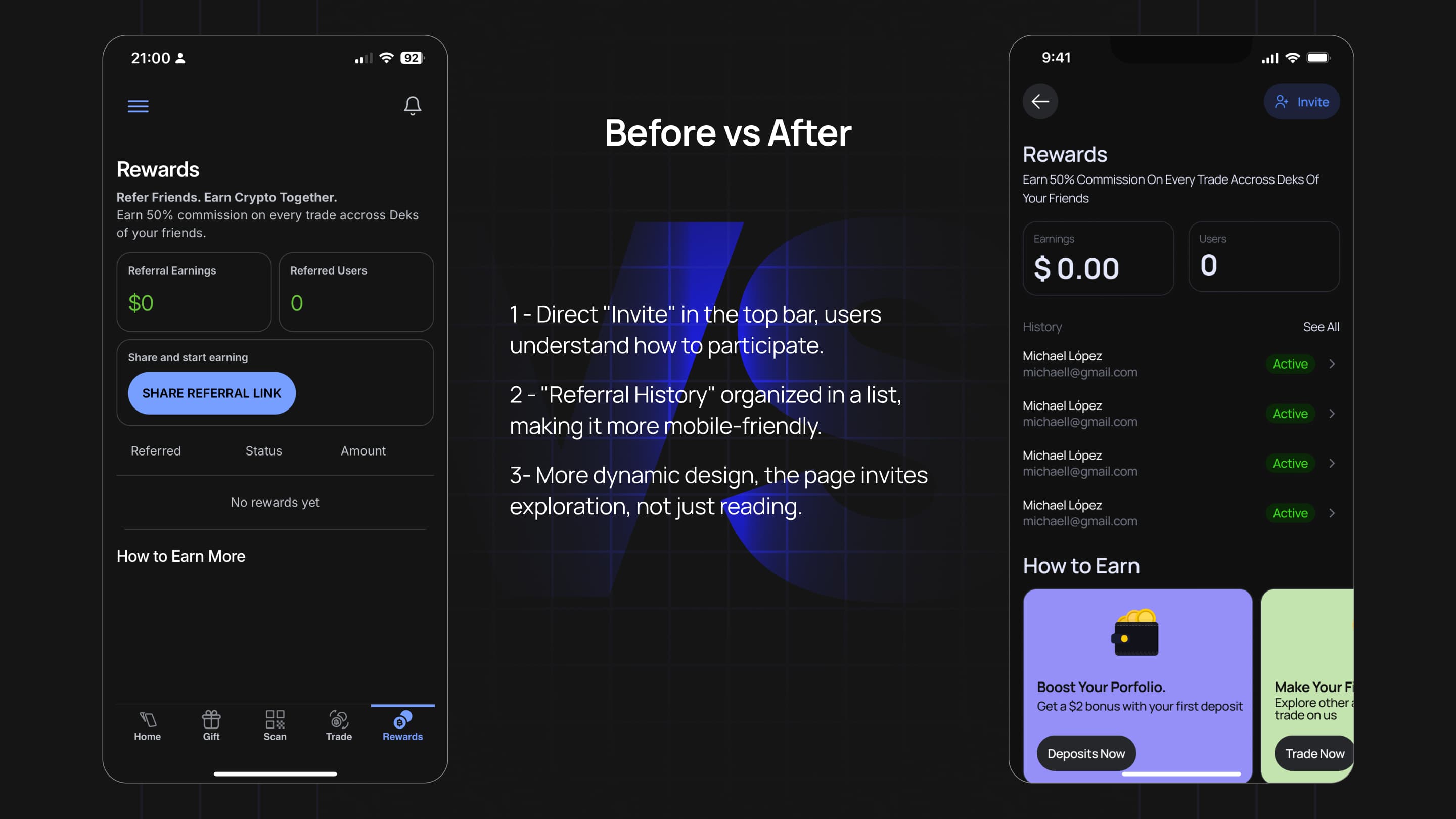
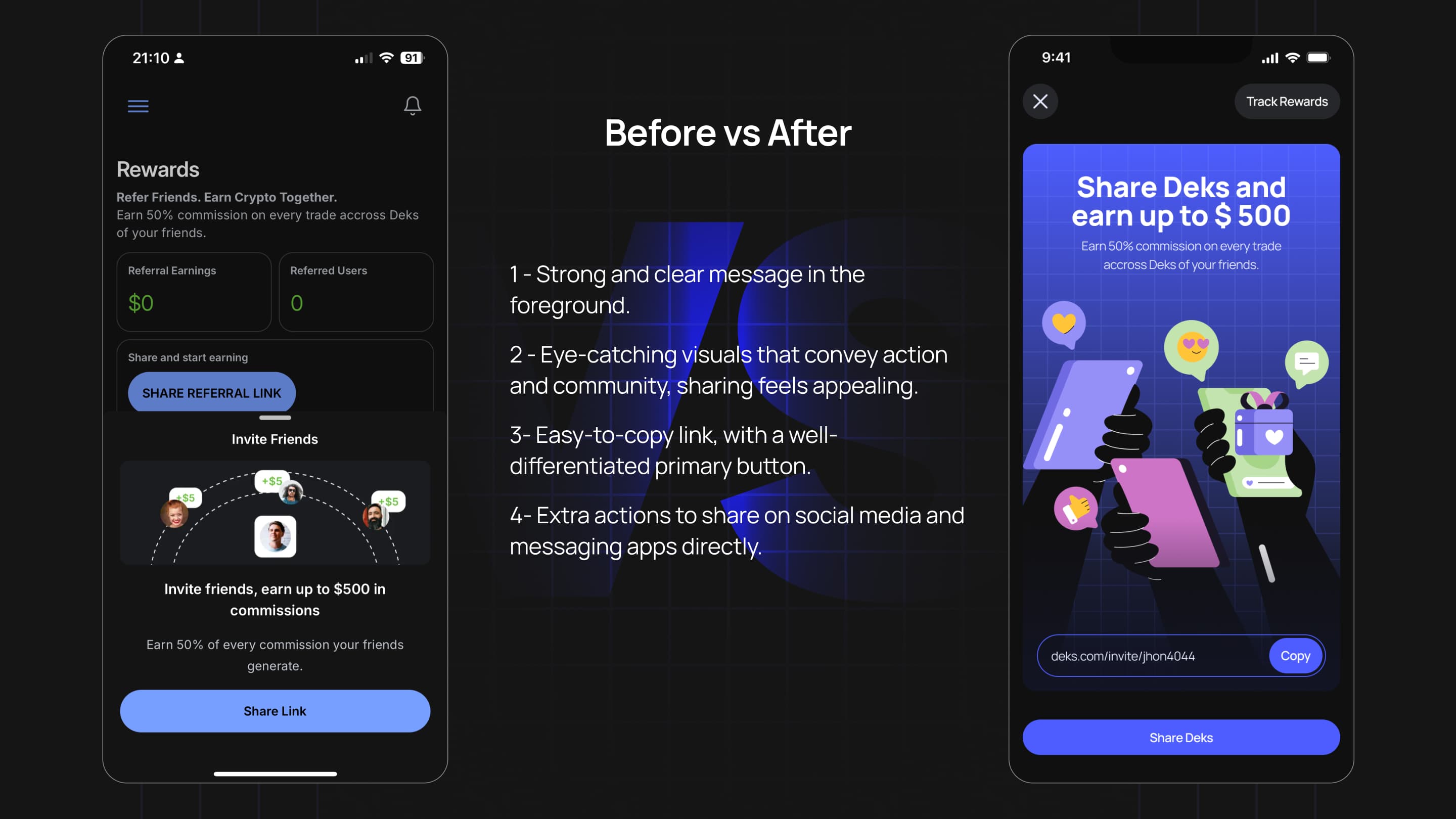
The original Rewards screen was static and passive.
It showed two counters, an empty table, and no strong visual reason to act. The feature existed, but it did not encourage engagement.
The redesign rebuilt Rewards around the referral metric, an active history list with status indicators, a direct Invite action in the top bar, and illustrated earning prompts at the bottom.
Outcome
The proposal was reviewed by the Deks founders and received positively.
The product later pivoted due to business constraints before implementation.
What this project shows
- Ability to audit an existing product and identify high-impact UX problems quickly
- Capacity to deliver high-fidelity proposals independently, without a formal brief
- Understanding of conversion patterns in early-stage fintech and Web3 products
- Ability to improve an existing visual direction without replacing the brand identity
- Product judgment: focusing on hierarchy, navigation, and action clarity instead of redesigning everything for the sake of redesigning
Previous project
DomainPlug