
BlockBind
- Web3
- Mobile UI
- Design system
- Figma
- Prototyping
- Component design
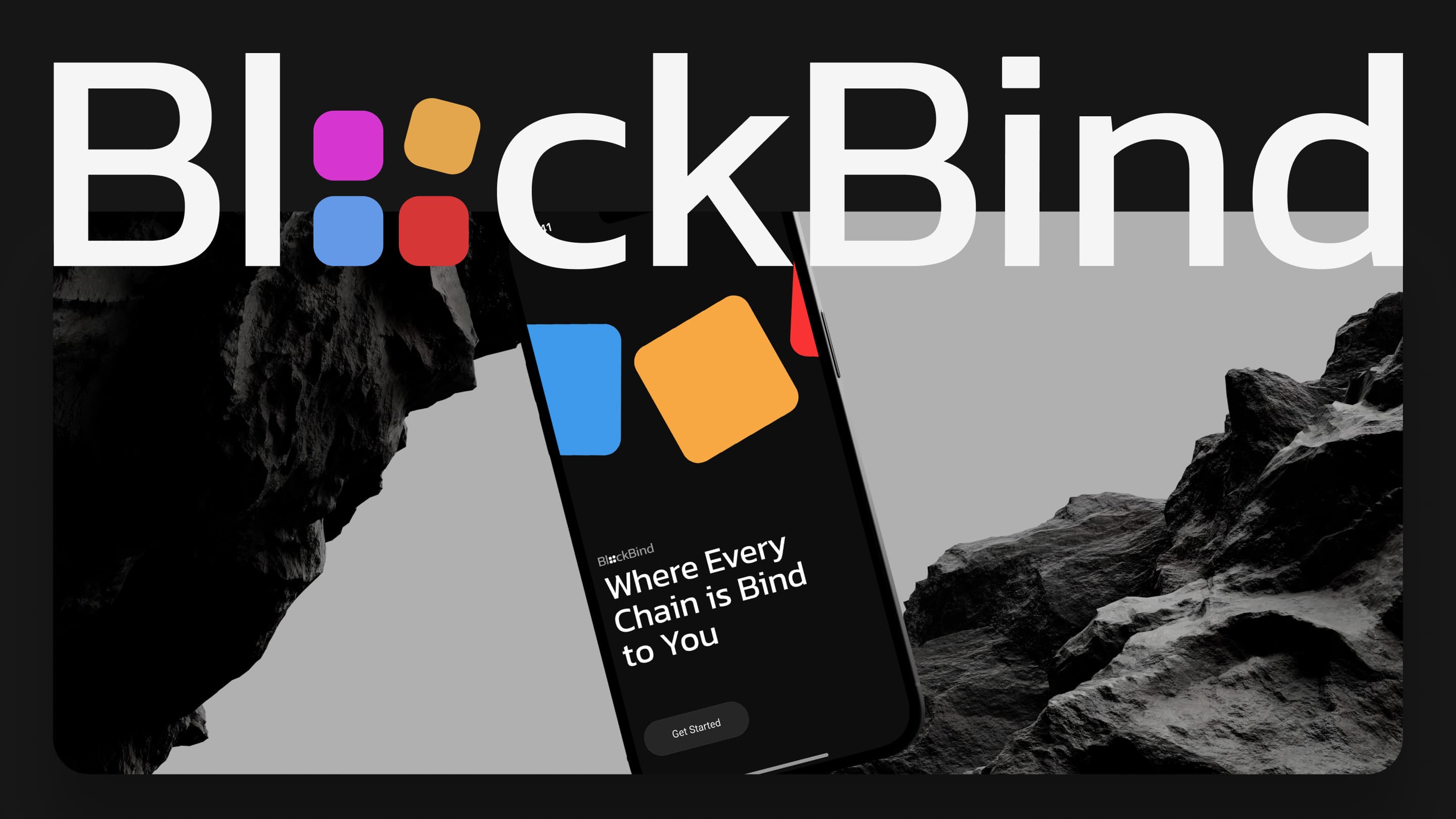
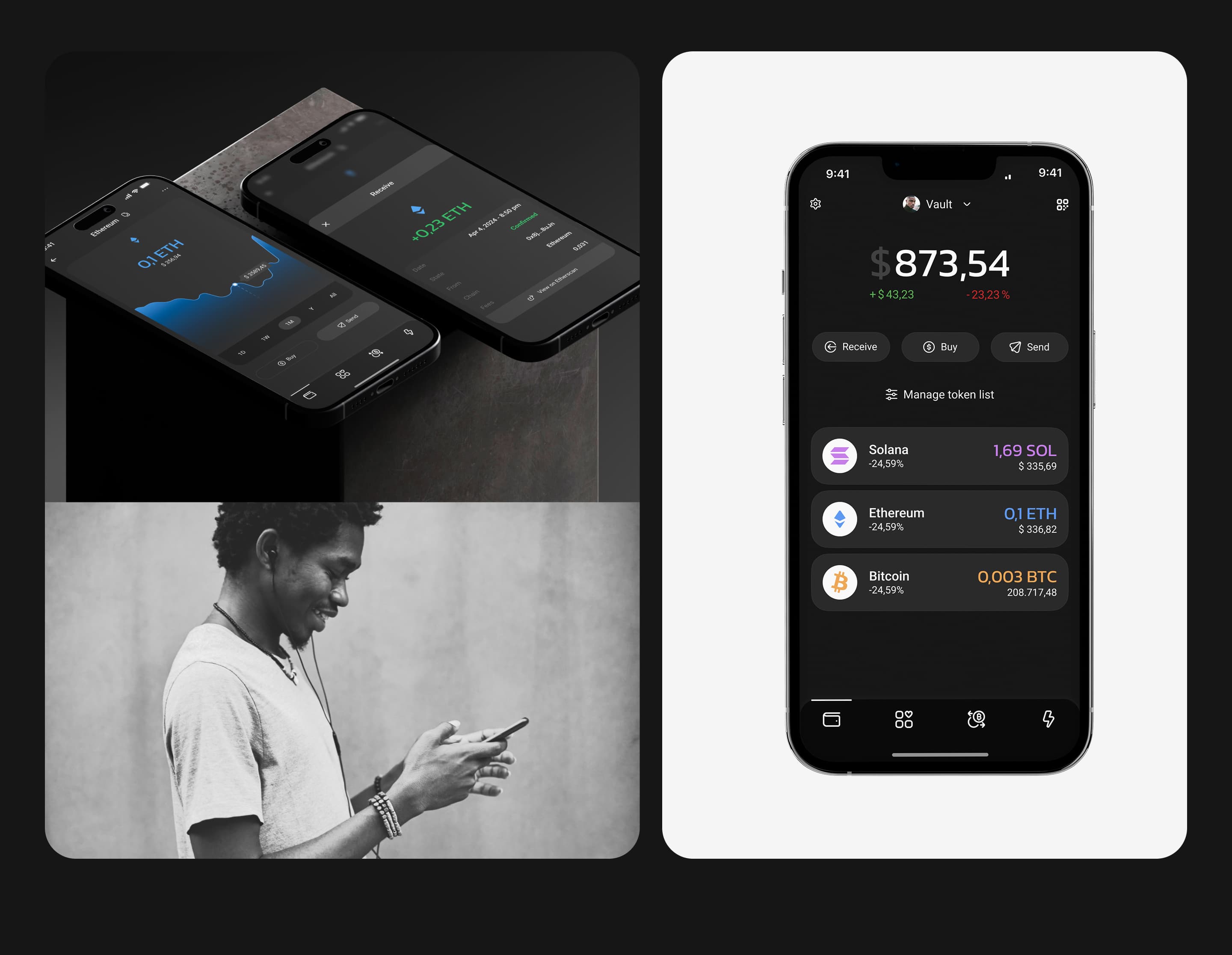
A mobile crypto wallet designed to make digital asset management accessible and intuitive through a cohesive visual system and simplified interface.
Personal exploration project
Visual system
Fintech / Cryptocurrency / Web3
2024
Mobile app · iOS and Android
Concept / Completed design exploration
Product Designer — solo
Design Challenge
The challenge was to design a crypto wallet that felt simple and approachable without removing the functionality users expect from a serious digital asset product.
Many existing wallets either overwhelm users with technical jargon or hide important information — price charts, transaction history, and fees — behind unclear interfaces. The experience needed to balance beginner accessibility with the depth experienced users demand.
Design Direction
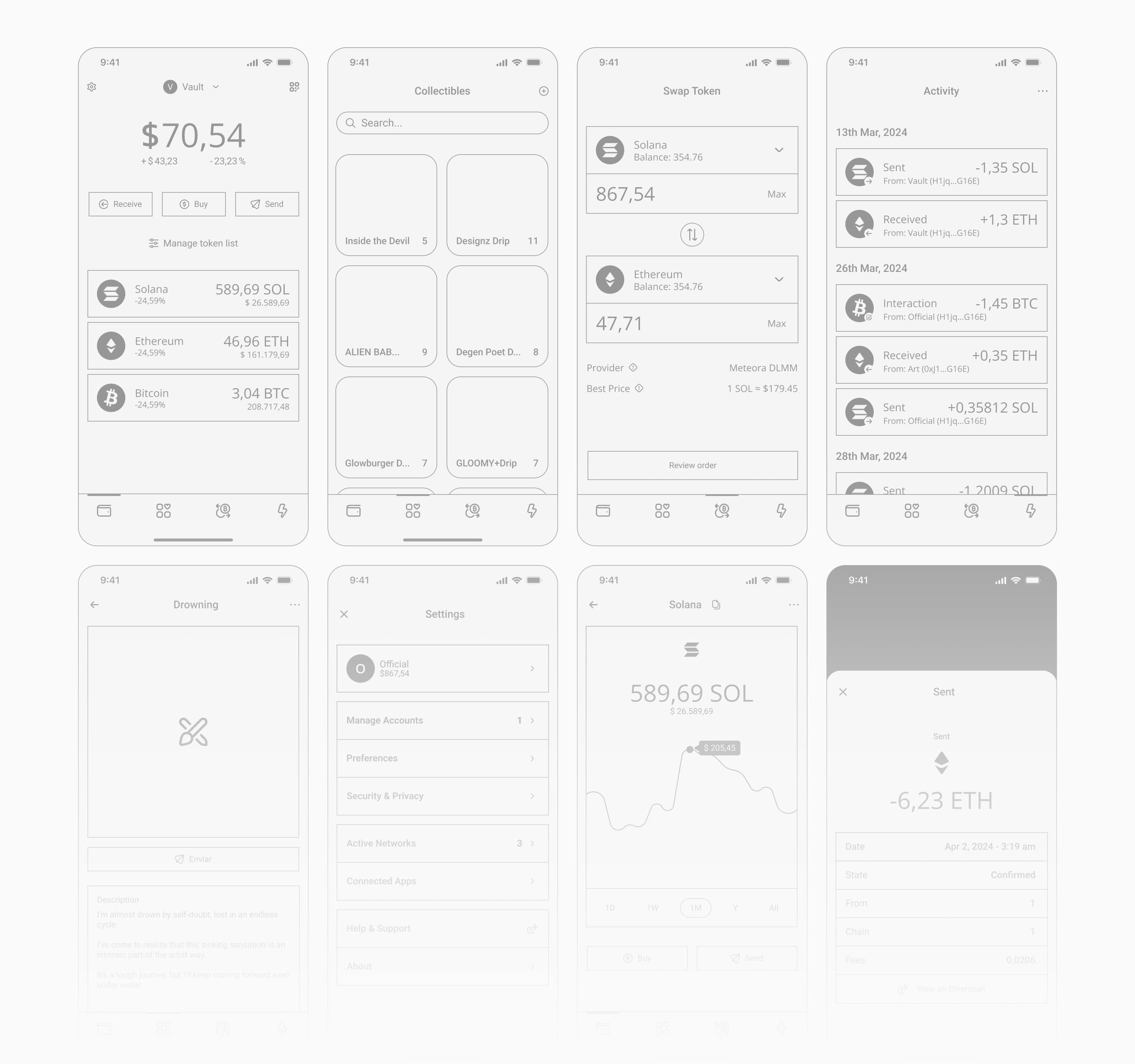
The interface was built around a minimal, functional color system, consistent spacing, and predictable interaction patterns.
Minimal color palette with functional accents. A dark neutral background reserves color for information that requires attention: charts, performance, states, and CTA buttons.
Consistent 4px spacing system. Every margin, padding, and alignment follows a 4px grid — creating a predictable layout that scaled across 30+ screens.
Open Sans typography system. The direction sheet standardizes on Open Sans for headings and body, with a fixed scale at 14px, 16px, 32px, 40px, and 56px — one family, clear hierarchy, and predictable scanning on mobile.
Component-first approach. Reusable buttons, cards, inputs, bottom sheets, modals, toasts, and a custom swipe confirmation were defined early to maintain consistency throughout.
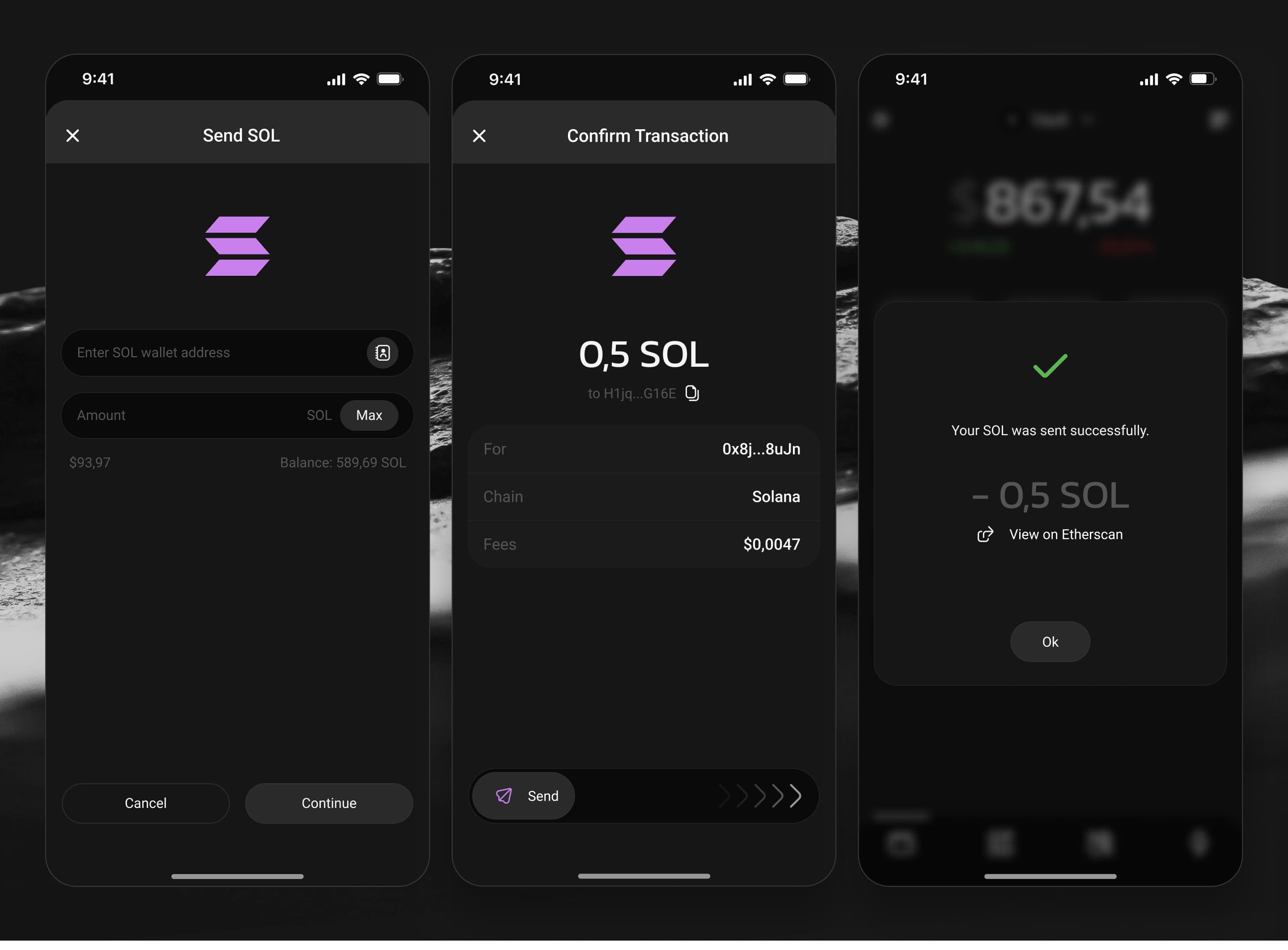
Swipe-to-confirm for critical actions. Sending or swapping crypto uses a swipe gesture instead of a standard button, adding intentional friction and reducing accidental submissions.
UX Structure
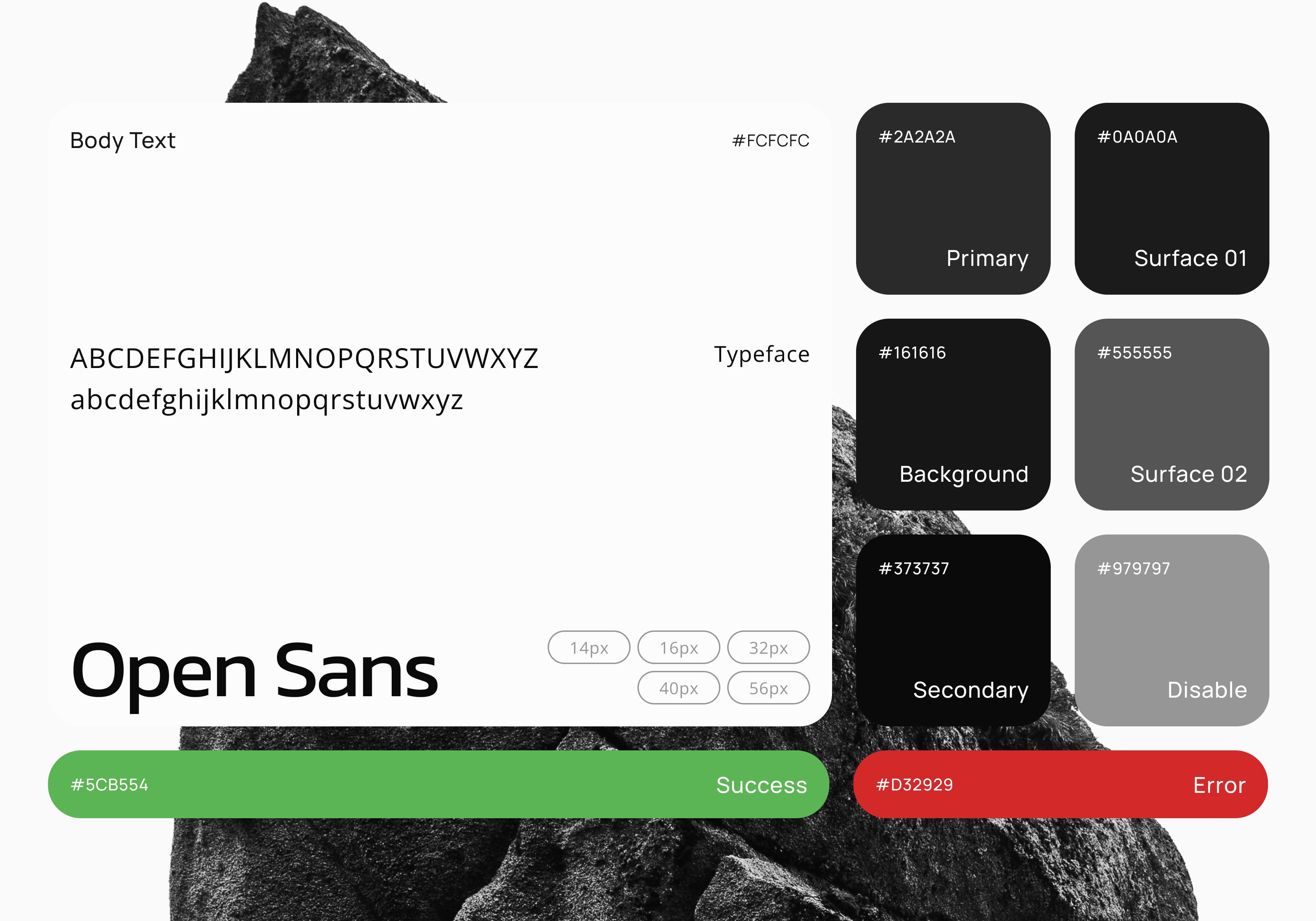
The experience was structured around quick wealth management at a glance, with deeper interactions available one tap away. Most common actions are visible from the home screen: check balance, review holdings, send, receive, and buy.
Flow 01 / 11
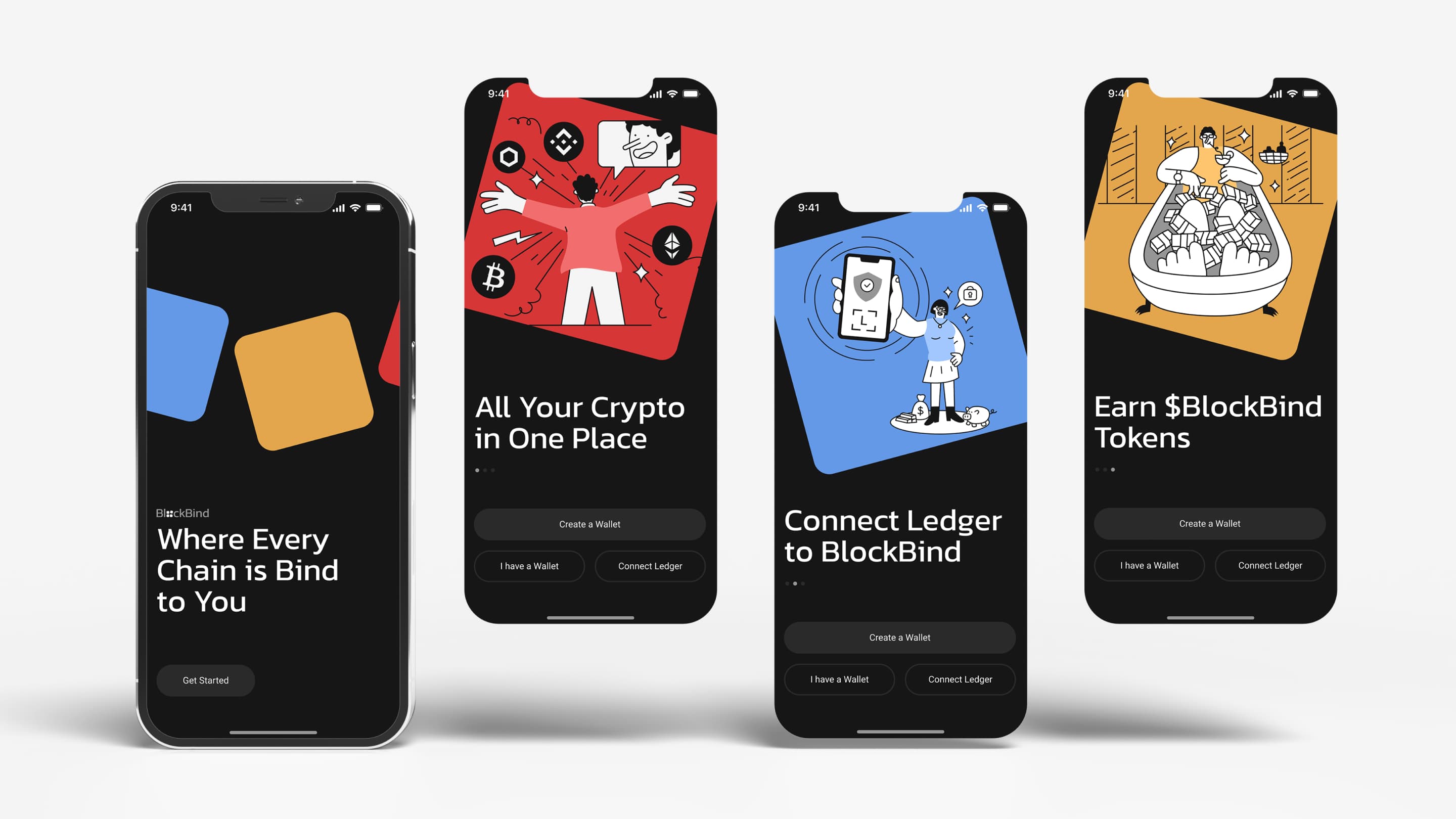
Onboarding & Auth
#f1 · wideHome / Wallet Dashboard
#f2Main Navigation
#f3Receive Flow
#f4 · wideBuy Flow
#f5 · wideSend Flow
#f6 · wideSwap Flow
#f7 · wideNFTs / Tokens Flow
#f8Activity Flow
#f9Settings Flow
#f10 · wideGlobal Fallback States
#f11 · wideResult
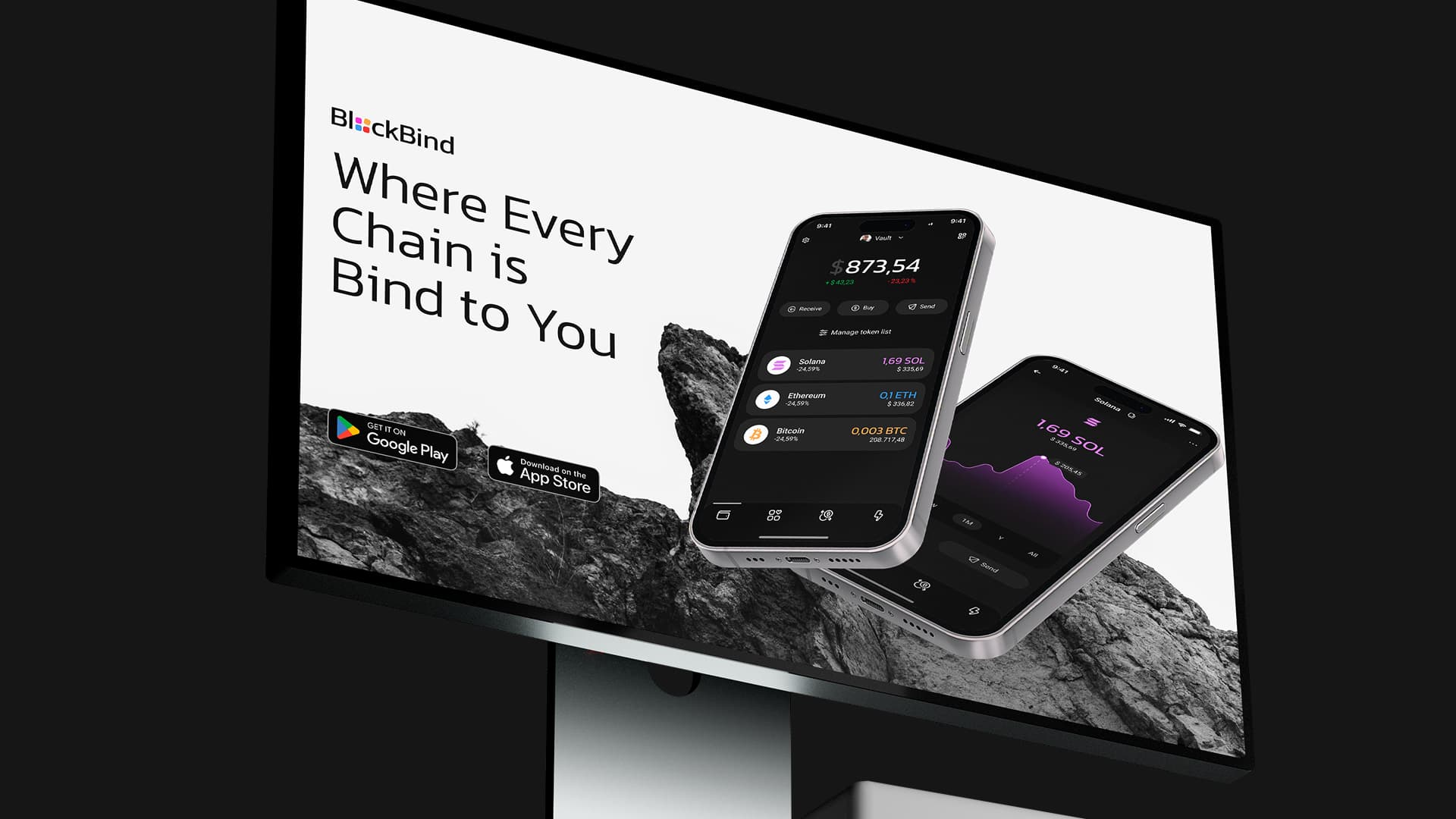
The final design delivered a cohesive and scalable mobile wallet UI system across 30+ screens. The interface maintains consistency through a disciplined use of spacing, typography, color, and reusable components — making crypto asset management feel approachable without oversimplifying the product.
What This Project Demonstrates
- Visual system thinking: Designing beyond individual screens to create a scalable component library.
- Information hierarchy in complex products: Making financial data accessible without overwhelming users.
- Interaction design for security: Using swipe-to-confirm to balance usability and safety.
- Attention to detail: Maintaining spacing, typography, and component consistency across a large product scope.
Previous project
PineAppNext project
DomainPlug